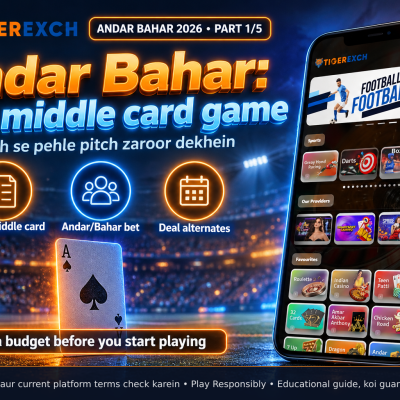
Quick answer: Andar Bahar is a card game where a single middle card is dealt, and players bet on which side—Andar (inside) or Bahar (outside)—will receive a matching card next. Each round is independent; the card that appears is down to a shuffled deck, not a repeating pattern or a "due" result. There is no skill, sequence, or system that can shift the odds in a single session.
Key takeaways
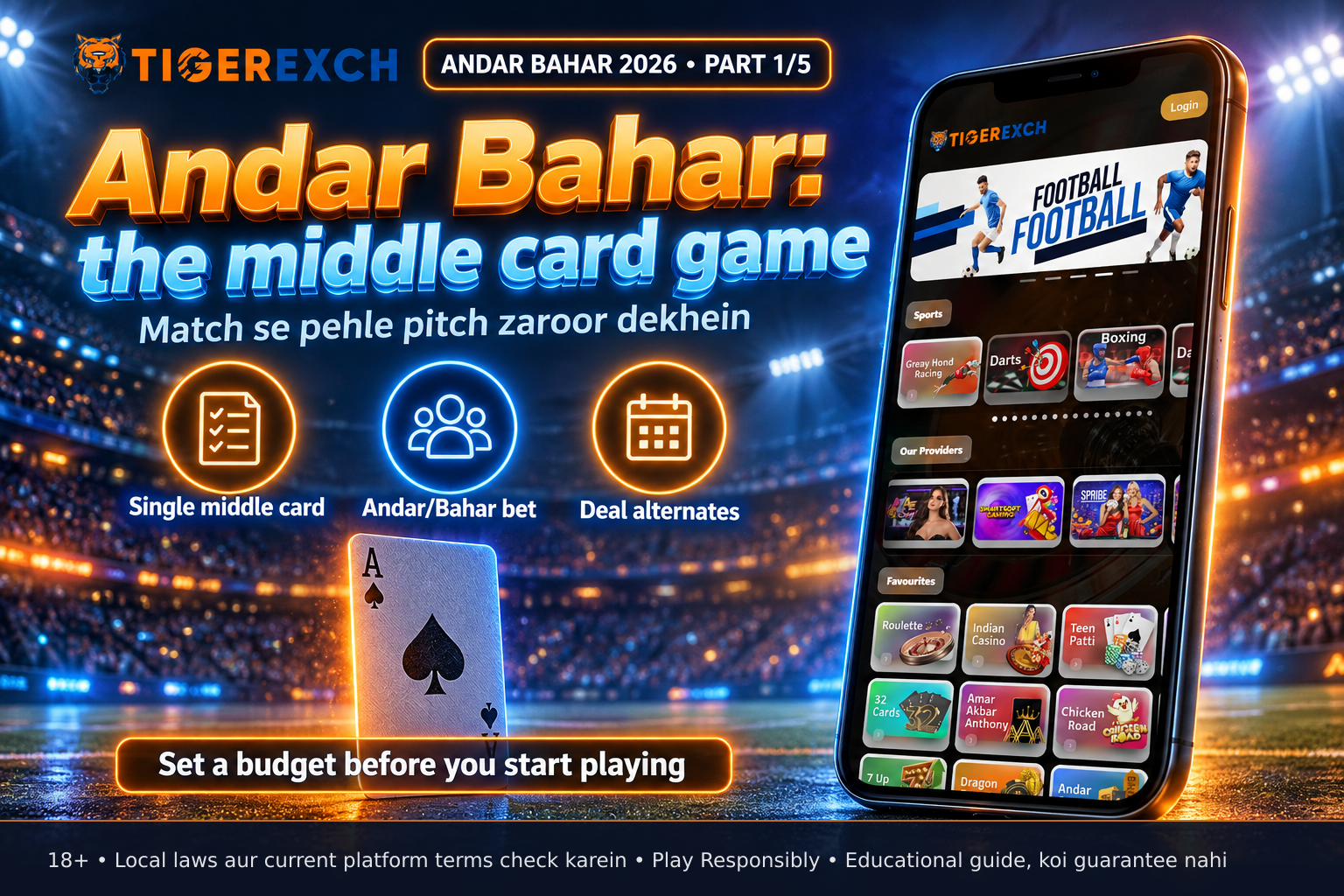
- The game starts with one middle card; the dealer then deals alternately to Andar and Bahar until a match appears.
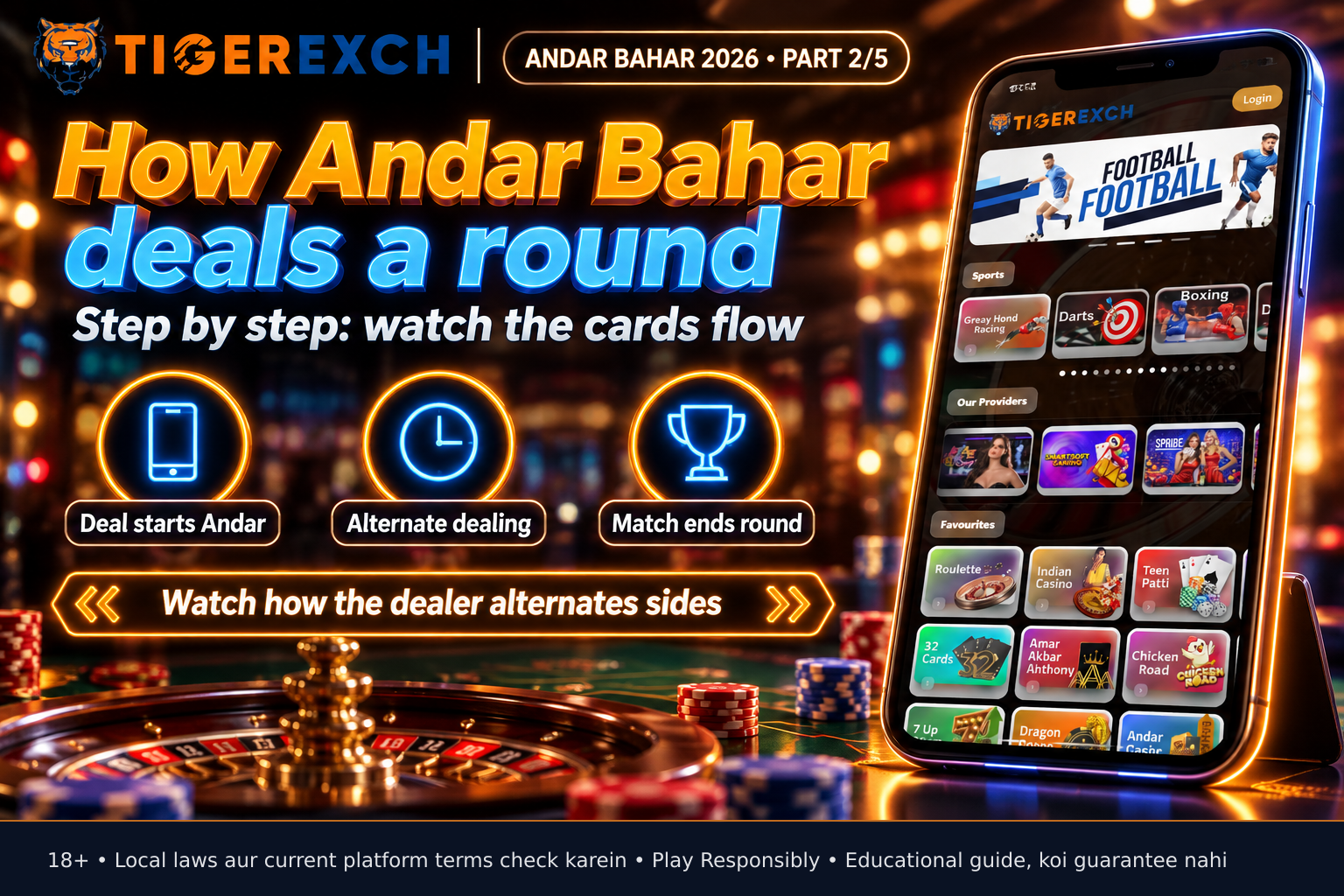
- Andar has a slight statistical edge because the first card goes to that side, but the house edge remains around 3–5 % depending on the variant.
- Every round is an independent event—previous results do not influence the next shuffle.
- No pattern, streak, or "due" result can change the odds of the next round.
- Always check the platform’s RTP and house-edge information before playing, and set a budget you can afford to lose.
Andar Bahar is common in Indian circles, played at festivals, on street corners, and now on phone screens. The rules look simple, but the "how" matters more than the "what". This guide explains the mechanism, the maths, and why looking for patterns is a dead end.
what it is and why it matters
Andar Bahar starts with a single card dealt face-up to the centre of the table. This is the Joker or target card. The dealer then deals cards alternately to two sides: Andar (inside) and Bahar (outside). The round ends the moment a card matching the Joker’s rank appears on one side. Players bet on which side that will be.
The appeal is speed. A round can finish in under a minute. But the simplicity also makes it easy to misunderstand how the odds work. Many players track "streaks"—if Andar has won three times in a row, they expect Bahar next. Mathematically, that expectation has no basis. The deck is reshuffled (or the shoe is advanced) for each round, so the odds reset.
Why does this matter? Because believing in a pattern can lead to larger bets after a loss, chasing a result that the maths says is no more likely than the last spin. This guide stays on the side of education: how the game works, what the odds are, and where the house edge sits. It does not offer a winning formula, because none exists.
how the game works: a step-by-step example
Let’s walk through a single round with hypothetical numbers so the mechanism is clear. These numbers are examples; they are not from any specific live game.
- The dealer places one card face-up in the centre. Let’s say it is a 7♠ (7 of spades). This is the target.
- The dealer deals the first card to Andar. It is a K♥ (king of hearts). Not a match.
- The dealer deals the next card to Bahar. It is a 5♦. Not a match.
- Andar receives another card: 9♣. Still not a match.
- Bahar receives another card: 7♣. This matches the centre 7♠. The round ends. Bahar wins this example.
In this worked example, three cards were dealt to each side before the match appeared. If the match had appeared on the first Andar card, Andar would have won instantly. The position of the match is purely down to where the shuffled deck falls.
comparison table: andar bahar variants
| variant | typical RTP | typical house edge | first-card advantage |
|---|---|---|---|
| classic (8‑deck shoe) | 96.52 % | 3.48 % | Andar wins on the first card dealt, giving it a tiny edge |
| fast‑play (1‑deck, quick succession) | 95.00 % | 5.00 % | Same first-card rule, but faster rounds increase the house’s share over time |
| online RNG version | 97.00 % | 3.00 % | RNG ensures total independence; the first-card rule still applies in code |
RTP and house edge are long-run averages. They say nothing about any single round or session. Figures are illustrative of common industry ranges; always check the specific platform’s help section for the exact numbers.
The table above shows that the first card dealt always goes to Andar. That gives Andar a microscopic advantage in live, physical games where the dealer physically places the first card. In online RNG versions, the code may still follow that rule, or it may randomly assign the first card. The RTP column reflects the expected return to player over thousands of rounds—not a guarantee for any player’s session.
why every round is chance, not pattern
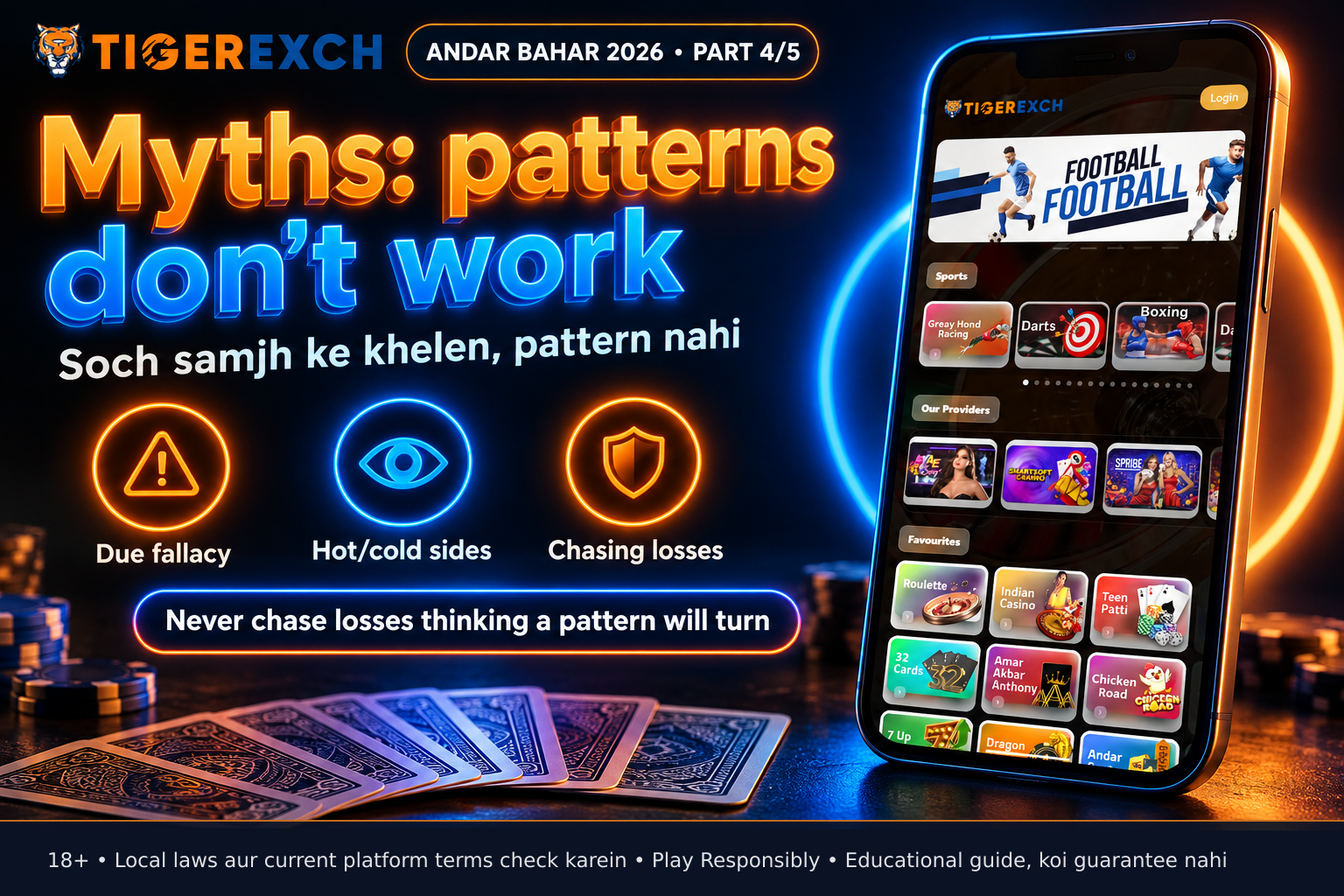
The most persistent myth in Andar Bahar is the "due" fallacy. Players sometimes think: "Andar has won the last five rounds, so Bahar is due." In a truly random system, the probability of Andar winning the next round is exactly the same as it was in the first round. The deck has no memory.
Another common belief is that tracking the colour or suit of previous cards can shift the odds. Andar Bahar usually uses a single deck or a shoe, and the match condition is rank-only (e.g., any 7). The colour or suit of earlier cards has no bearing on where the next matching rank will land.
The house edge is built into the payout structure. In most versions, a winning bet on Andar or Bahar pays 1:1. The slight house edge comes from the fact that the matching card is statistically slightly more likely to appear on one side depending on the dealing order, but the edge is small—typically 3–5 % of the total money wagered over the long run. No sequence of wins or losses alters that percentage for the next round.
Also read: Top Tools Every Startup Should Know
common mistakes to avoid
- betting more after a losing streak, thinking the "other side is due." The odds reset each round; a losing streak does not make the other side more likely.
- tracking "hot" or "cold" sides. Past results are history; they do not influence the next shuffled deck.
- ignoring the house edge. A 1:1 payout with a 4 % house edge means the casino expects to keep ₹4 for every ₹100 wagered over time. Short-term wins are possible, but the edge is always there.
- playing on a platform without checking RTP. Some online versions publish their return-to-player percentage; others do not. If the number is not visible, the platform’s terms should be checked before depositing.
checklist: what to check before playing andar bahar
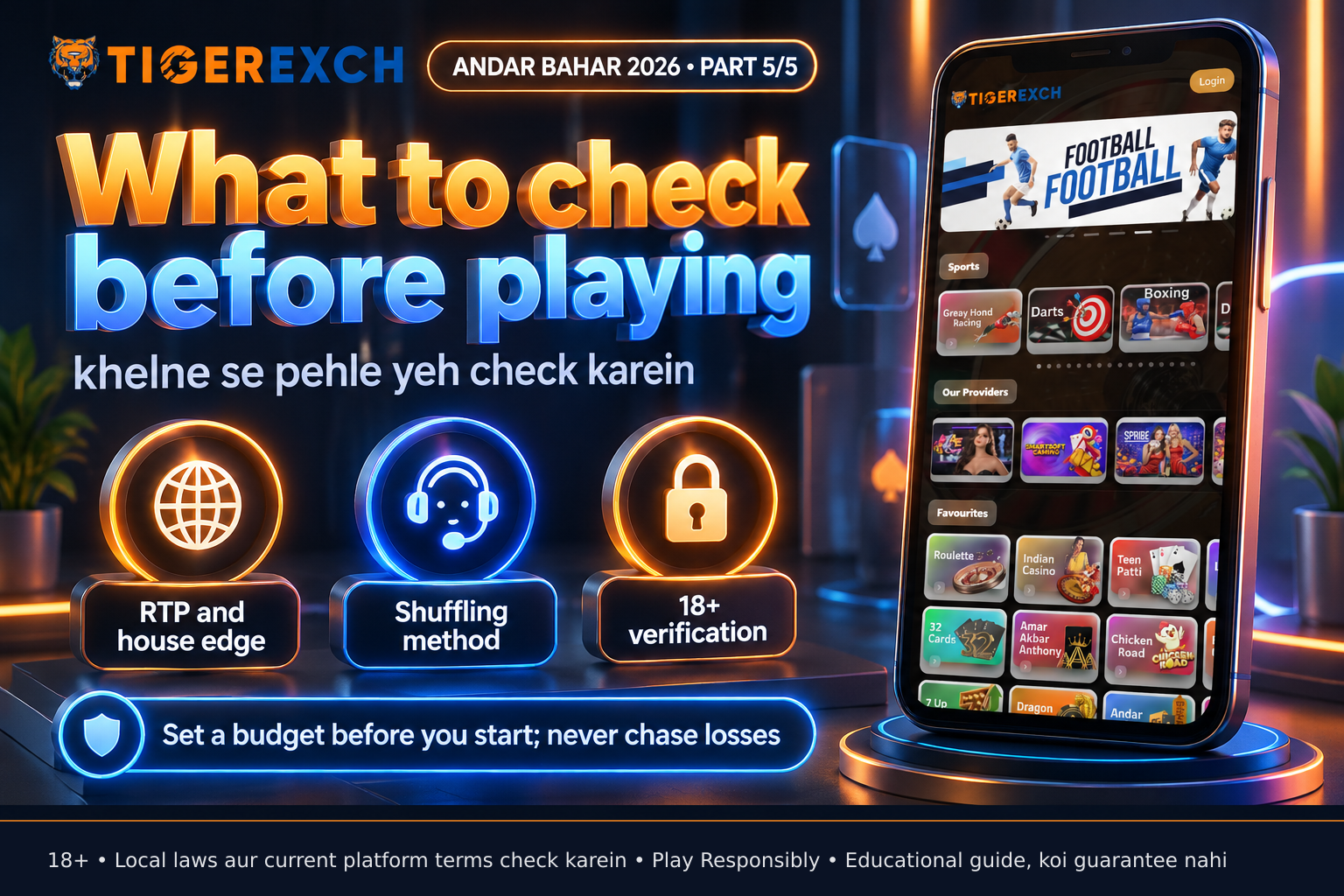
| what to check | why it matters |
|---|---|
| RTP and house edge published by the platform | tells you the long-run expected return; if absent, check the platform’s help section or terms |
| shuffling method (physical deck, RNG, live dealer) | determines whether the game is truly random or follows a fixed dealing pattern |
| withdrawal and deposit terms | processing times vary; never assume "instant" payouts are guaranteed |
| 18+ verification | most platforms require age verification; play only on sites that enforce this |
| responsible‑play limits | set a budget before you start; never chase losses thinking a pattern will reverse |
brand
Andar Bahar is featured on many online casino platforms. If you are trying it on a specific site, look for the game’s RTP and house‑edge information in the help or about section, and always verify the site’s licence and terms before depositing. Remember that no platform can alter the fundamental randomness of the card draw, but individual sites may have different payout structures or rules variants.
call to action
If you try Andar Bahar, keep the focus on the game’s speed and the maths behind it—enjoy the round, but remember that every deal is an independent chance, not a step toward a pattern.
faq
- andar bahar kaise khelen? The dealer puts one card face-up in the centre. Players bet on Andar or Bahar. Cards are dealt alternately to each side until a card matching the centre card’s rank appears. The side that gets the match wins.
- kya andar bahar mein pattern ya trick hoti hain? Nahi, har round independent hoti hai. Pehle ka result next round par effect nahi karta. Koi bhi sequence ya streak pattern nahi badal sakti.
- andar ya bahar mein koi side safest hoti hai? Andar ko pehle card milta hai, isliye uski case-theoretical probability slightly better hoti hai, lekin house edge same rehta hai. Koi side "safe" nahi hoti—har bet ka risk same hota hai.
- online andar bahar ka RTP kitna hota hai? RTP depends on the variant. Common ranges are 95 %–97 %. Check the specific platform’s help section for the exact number; if it is not listed, assume the house edge is built into the payout.
- kya main andar ya bahar par bet karke sure shot jeet sakta hoon? Nahi, ye kismat aur probability ka khel hai. Koi guaranteed win ya sure shot strategy nahi hoti. Har round har player ke liye same probability hoti hai.
- agar maine andar pe 5 baar laga diya aur baar baar haar raha hoon, to kya baar baar baaher karna chahiye? Nahi, har round ki probability same rehti hai. Pehle ke 5 result next round par effect nahi karte. Baar baar baahar karna koi mathematical benefit nahi deta.
- andar bahar mein house edge kaise calculate hota hai? House edge is the difference between the true odds and the payout odds. In a 1:1 payout game where the matching card has a specific probability of landing on either side, the casino retains a small percentage (typically 3–5 %) of all money wagered over thousands of rounds.
- what happens if the deck runs out before a match appears? In a properly shuffled physical game or a certified RNG, the deck is reset or a new shoe is used before that situation arises. The game is designed so a match will appear before exhaustion.
- kya andar bahar mein card counting ya tracking possible hai? Not effectively. Because the match condition is rank-only and the deck is reshuffled or advanced each round, tracking individual cards does not give a consistent edge. The randomness of the shuffle resets the state every time.
- kya koi app ya site andar bahar mein best odds deti hai? Odds vary by platform and game variant. Some online RNG versions publish higher RTP percentages than live‑dealer versions. Always compare the RTP and house‑edge numbers in the platform’s help section before playing.
- kya andar bahar mein "due" result ka concept sahi hai? Nahi. "Due" ka matlab ye mana jata hai ki pehle ka result next round par effect karta hai. Har round independent hoti hai, isliye pehle ka koi result next round ki probability badalne ka kaaran nahi hota.
- agar maine accidently double bet lagaya ho to kya karein? Most platforms allow you to contact customer care with your transaction ID. Check the platform’s help section for the process to request a bet cancellation or correction, if the option is available.
- andar bahar khilate waale platform par licence kaise check karein? Look for a licence number in the footer or "About" section. Cross‑check that number on the regulator’s official website if you want to verify legitimacy. If no licence information is displayed, treat the platform with caution and read user reviews independently.
- agar main andar bahar khelte hue technical issue face kartoon—jaise game crash ya disconnect—to kya hoga? Most certified platforms have a "round completion" rule: if a round was still in progress when the connection dropped, the outcome is determined by the server at the moment of disconnect. Check the platform’s terms or FAQ for their specific policy, and keep your transaction ID for any support query.
- andar bahar khelne ka best time kya hai? Koi "best time" nahi hota har round ki probability same rehti hai. Khelna aapki marzi ka case hai, lekin kabhi bhi play karein, apna budget set karein aur 18+ guidelines follow karein.
final takeaway
Andar Bahar is a game of fast rounds and simple bets. The centre card starts the action, and the matching card decides the winner. What makes every round a pure chance event is the shuffle—or the RNG algorithm—that comes before each deal. No sequence, no streak, and no "due" result can shift the odds for the next round. Understanding this helps you keep the game in perspective: it is entertainment, not a maths problem with a solution. Play within your means, check the platform’s RTP if you can, and always remember the 18+ and responsible‑play lines.
Sources
- Andar Bahar rules and dealing mechanics — verified from standard casino game guides and industry rule sets.
- RTP and house‑edge figures — illustrative ranges from commonly published online casino data; specific platform values should be checked on the operator’s help page.
- Probability and independence of rounds — standard gaming mathematics; each round is a fresh shuffle with no memory of previous outcomes.
Draft requires
More from Tigerexch247
Related reading
- Responsible Gaming Tools Every Operator Must Offer (allwhitelabel247.com)
- Responsible Gaming Tools Every Operator Must Offer (allwhitelabel247.io)
Visit the official Tigerexch247 site: tigerexchange247.co. 18+ only. Please play responsibly.