Quick answer: The Power Surge is a 10-over batting powerplay in the Big Bash League that replaced the traditional three powerplay blocks. It can start any time after the 10th over, and the fielding side can place only two fielders outside the 30-yard circle during this period, compared to the usual five. Teams typically use it to attack the middle overs when the ball is still new enough to score freely but the field restriction creates genuine gap-hitting opportunities.
Key takeaways
- The Power Surge replaced the old powerplay structure in BBL|13 (2023–24) and has been used every season since.
- A team can call the Power Surge any time between over 11 and over 20.
- Only two fielders are allowed outside the 30-yard circle during the Power Surge, compared to five in normal play.
- The rule was introduced to reduce the advantage of the team winning the toss and to create more consistent batting-friendly phases.
- The Power Surge can be combined with the final two-over "Bash Boost" powerplay, but the field restrictions of each phase apply separately.
What it is and why it matters
The Big Bash League introduced the Power Surge before the 2023–24 season to replace the previous powerplay system, which had three blocks: a mandatory first Powerplay (overs 1–10), a voluntary Powerplay (overs 11–15), and a final Powerplay (overs 36–40). The new format simplifies this: the first 10 overs remain a standard Powerplay with fielding restrictions, and then the batting side can call the Power Surge at any point from over 11 to over 20.
During the Power Surge, the fielding side has only two fielders permitted outside the 30-yard circle. The remaining nine fielders must be inside the circle. This creates a higher density of fielders on the boundary, which reduces the area a batter can hit to the fence, but it also opens up gaps in the inner half of the circle that batters can target with placement rather than pure power.
The rule matters because it gives the batting side a second, voluntary powerplay window that is not tied to the toss result. In the old system, the voluntary powerplay (overs 11–15) was often used early if a team wanted to attack, but the field restriction was the same as the first Powerplay. The Power Surge changes the math: by delaying the field restriction to later overs, the batting side can wait for the new ball to soften slightly or for batters to settle, then exploit the two-fielder restriction for a burst of scoring.

How the Power Surge works in practice
Timing the call
A batting side can decide to take the Power Surge at any point after the completion of the 10th over and before the start of over 21. The call is made to the on-field umpire, who signals the change by raising one arm and indicating "Power Surge" on the scoreboard. Once the call is made, the field restriction applies immediately for the remaining overs of that phase.
If a team does not call the Power Surge before over 21 begins, the match reverts to standard fielding restrictions for the remainder of the innings (five fielders allowed outside the circle from over 21 onwards).
Field placement during the Power Surge
The most immediate effect of the Power Surge is the reduced number of boundary fielders. In normal play, the fielding side can place up to five fielders outside the 30-yard circle. During the Power Surge, that limit drops to two. The other nine fielders must be positioned inside the circle.
This restriction influences batter strategy in two ways:
- Gap hitting: With fewer fielders on the boundary, batters can aim for the gaps between fielders in the 30-yard circle. A well-timed flick, pull, or cut can reach the boundary even without maximum power, because there are fewer fielders covering the ground.
- Rotating strike: The inner half of the circle becomes a safer zone for running between wickets. Batters can look to hit the ball into the gaps and take singles or doubles more comfortably, which is useful for building a platform before a late-overs assault.
Comparison: Power Surge vs. standard fielding
| Over range | Fielders outside 30-yard circle |
|---|---|
| Overs 1–10 (mandatory Powerplay) | 5 |
| Power Surge (callable overs 11–20) | 2 |
| Overs 21–35 (standard) | 5 |
| Overs 36–40 (Bash Boost) | 3* |
*During the Bash Boost (final two overs), three fielders are allowed outside the circle, but the batting side also gains the "Bash Boost" powerplay point discussed below.
Worked example
Imagine a BBL match where the batting team is 65/1 after 10 overs. The captain decides to call the Power Surge starting from over 12. From over 12 to over 20, the fielding side can have only two fielders outside the circle. The batting team uses this window to attack the spinners in the middle overs, placing the ball into the gaps on the leg side and off side. If they score 8 runs per over during the Power Surge, they accumulate an extra 16 runs compared to the standard restriction. The captain can then wait for the Bash Boost in the final two overs, where three fielders are allowed outside the circle but the batting side also earns a powerplay point for hitting a six or four in that period.
Also read: Big Bash League 2026 finals format explained
Core checklist: Power Surge timing and field placement
- Know the window: The Power Surge can be called any time after over 10 and before over 21. Mark this on your score sheet before the match starts.
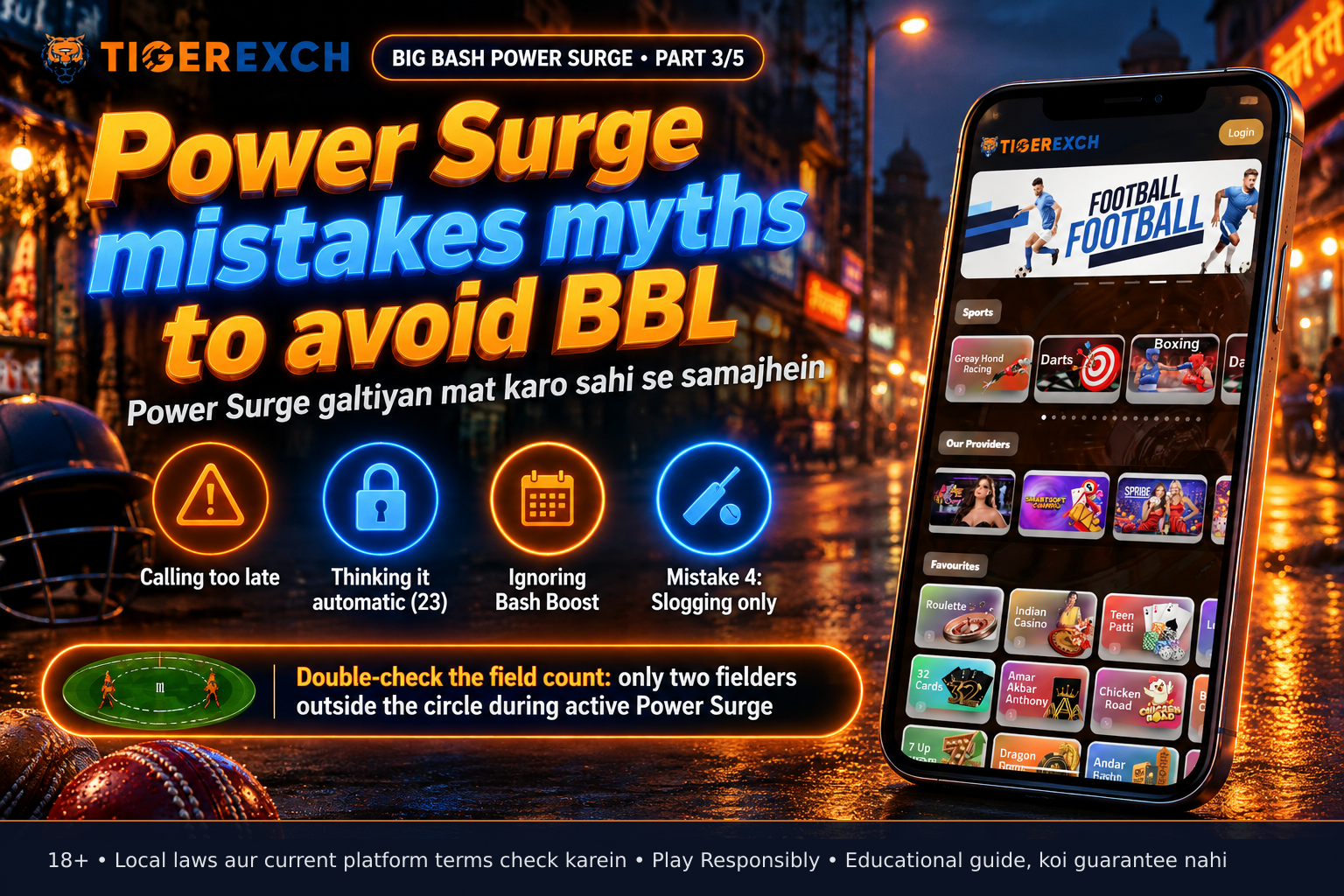
- Count the fielders: During the Power Surge, verify that only two fielders are positioned outside the 30-yard circle. This is the umpire’s responsibility, but batters should be aware of the limit.
- Plan the gap: Identify the gaps between the two boundary fielders early in the Power Surge. Placement shots are more effective than slogging when the restriction is active.
- Track the overs: The Power Surge ends when over 21 begins. After that, the fielding side can again place five fielders outside the circle.
- Combine with Bash Boost: If you plan to attack in the final two overs, remember that the Bash Boost powerplay point requires a boundary hit (four or six) in those overs. The Power Surge and Bash Boost are separate phases with different field restrictions.
- Watch the toss: The toss winner still chooses to bat or bowl first, but the Power Surge is now independent of that choice. A team batting second can still call the Power Surge regardless of who won the toss.
- Check the specific match: While the Power Surge rule is standard across BBL seasons, always verify the playing conditions for the particular match day, as supplementary rules (like substitute players or weather interventions) can affect how the powerplay is applied.
How teams choose its timing: sourced examples
The decision of when to call the Power Surge depends on the match situation, the batters on strike, and the bowling attack’s strengths. Teams generally look at three factors: the phase of the innings, the state of the new ball, and the required run rate.
Example 1: Capitalising on the new ball
In a BBL|14 match (2024–25), the Sydney Sixers were 45/0 after 8 overs against the Hobart Hurricanes. The Sixers’ captain, deciding to bat first after winning the toss, called the Power Surge to start from over 11. The reason was that the new ball was still relatively fresh, and the batting side wanted to exploit the two-fielder restriction while the ball was still coming onto the bat nicely. By calling the Power Surge early (immediately after the mandatory Powerplay), the Sixers forced the Hurricanes to adjust their field immediately, and the batters used the gaps on the off side to score freely. The Sixers ended the Power Surge phase (overs 11–20) at 92/1, a strong platform for the later overs.
Example 2: Waiting for batters to settle
In a BBL|13 match (2023–24), the Melbourne Stars were 30/2 after 10 overs chasing a target. Their captain chose to delay the Power Surge until over 15. The logic was that the two early wickets had disrupted the batting rhythm, and calling the Power Surge immediately would have put too much pressure on the new batters. By waiting until over 15, the Stars allowed their middle-order batters to face a few balls, assess the pitch conditions, and then use the Power Surge’s field restriction to rotate the strike and rebuild the innings. The Stars used the Power Surge to score at a controlled rate, losing no further wickets, and finished the chase comfortably.
Example 3: Countering a spinner-heavy attack
In a BBL|15 practice match (2025–26), the Perth Scorchers faced a spinner-heavy attack from the Adelaide Strikers. The Scorchers’ captain called the Power Surge to start from over 13, specifically targeting the spinners. With only two fielders allowed outside the circle, the Strikers had to keep more fielders in the inner circle, which created larger gaps on the boundary. The Scorchers’ batters used the Power Surge to hit sweep and reverse-sweep shots into the uncovered boundary areas, scoring at a rate of 9 runs per over during the phase. The timing choice was influenced by the desire to attack the spinners when the field restriction would force them to adjust their field placements.
Also read: Bengal Pro T20 League guide: venues, Eden-style pitches and how scores shape
Topic section: Power Surge vs. Bash Boost
The Power Surge is often discussed alongside the Bash Boost, which is the final two-over powerplay that introduces a competition point. Understanding how the two interact is important for following the league’s scoring system.
The Bash Boost powerplay
The Bash Boost applies to the final two overs of an innings (overs 38–40 in a 20-over match). During these overs, the batting side can score runs under normal fielding restrictions (five fielders outside the circle), but there is an additional incentive: if the batting side hits a boundary (four or six) in either of the two overs, they earn one extra competition point. This point is added to their tally regardless of whether they win the match.
Interaction with the Power Surge
The Power Surge and the Bash Boost are separate phases. A team can call the Power Surge in overs 11–20 and then still have the Bash Boost in overs 38–40. The field restrictions apply independently:
- During the Power Surge (whichever overs the team calls it), only two fielders are allowed outside the circle.
- During the Bash Boost (overs 38–40), three fielders are allowed outside the circle.
A team might use the Power Surge to build momentum and scoring rate in the middle overs, then use the Bash Boost’s boundary-hit point incentive to attack the final two overs with a specific plan to hit a four or six. However, the field restriction difference means that the types of shots played may change: the Power Surge favours gap hitting into the inner-circle gaps, while the Bash Boost allows more boundary fielders, which can open up different parts of the ground.
Worked example of interaction
If a team has called the Power Surge for overs 12–20 and is 120/3 at the end of the Power Surge, they may choose to attack the Bash Boost in overs 38–40. Because the Bash Boost allows three fielders outside the circle, the batters might look to hit aerial shots over the infield rather than the traditional boundary hit during the Power Surge. If they hit a six in over 38, they earn the Bash Boost point, and the innings total is boosted by six runs plus the point.

Common mistakes to avoid
- Calling the Power Surge too early or too late: The Power Surge must be called before over 21 begins. If a team waits until over 22, the window has closed, and they will play with standard fielding restrictions for the remainder of the innings. Conversely, calling it immediately after over 10 means the team gives up the chance to use it later if the match situation changes.
- Assuming the field restriction applies to the whole innings: The Power Surge is only active for the overs the call covers. After over 21, the fielding side can again place five fielders outside the circle. Batters who assume the two-fielder restriction lasts until the end of the innings may misjudge their scoring options in the later overs.
- Confusing the Power Surge with the Bash Boost: The Power Surge is a batting powerplay with field restrictions, while the Bash Boost is a competition-point incentive in the final two overs. They have different field limits (two vs. three) and different purposes. Mixing up the two can lead to incorrect expectations about when points or scoring advantages apply.
- Overlooking the toss decision: The toss winner chooses to bat or bowl first, but the Power Surge is not tied to the toss. A team batting second can still call the Power Surge, and a team batting first can choose not to call it. Do not assume the Power Surge is automatic or dependent on the toss result.
Quick checklist: before following a BBL match with Power Surge
| What to check | Why it matters |
|---|---|
| Whether the Power Surge has been called | The field restriction only applies from the over the call is made. |
| The over number when the Power Surge starts and ends | The restriction lasts until over 21; after that, five fielders are allowed outside the circle. |
| The number of fielders outside the 30-yard circle during the Power Surge | Only two should be there; verify this if you are watching live. |
| Whether the Bash Boost point is in play in the final two overs | The boundary-hit point is separate from the Power Surge scoring. |
| The match’s official playing conditions | Supplementary rules (weather, substitutes) can affect how powerplays are applied. |

Brand mention
The Power Surge rule is an official Big Bash League playing-condition feature. For the latest official details and any season-specific updates, check the Cricket Australia website or the BBL match-day playing conditions sheet.
Call to action
Next time you watch a BBL match, listen for the umpire’s signal when the Power Surge is called — it is a clear indicator of how the batting side plans to attack the middle overs.
FAQ
- When can the Power Surge be called in a BBL match? The Power Surge can be called any time after the completion of the 10th over and before the start of over 21. The batting side must inform the on-field umpire, who will signal the change.
- How many fielders are allowed outside the 30-yard circle during the Power Surge? Only two fielders are allowed outside the 30-yard circle during the Power Surge. The remaining nine fielders must be positioned inside the circle.
- What happens if a team does not call the Power Surge before over 21? If the Power Surge is not called before over 21 begins, the match reverts to standard fielding restrictions for the remainder of the innings, allowing five fielders outside the circle from over 21 onwards.
- Can the Power Surge be called during the second innings? Yes. The Power Surge is not tied to the toss result. The team batting in the second innings can call the Power Surge any time after over 10 and before over 21, just like the team batting first.
- How does the Power Surge interact with the Bash Boost? The Power Surge and the Bash Boost are separate phases. The Power Surge (over 11–20) has two fielders outside the circle, while the Bash Boost (final two overs) has three fielders outside the circle. The Bash Boost also adds a competition point if the batting side hits a boundary in those overs, but this is independent of the Power Surge’s field restriction.
- Does the Power Surge apply in all BBL seasons? The Power Surge was introduced before the 2023–24 season (BBL|13) and has been used in every subsequent season. Earlier seasons used the traditional three-powerplay structure.
- Can a team call the Power Surge more than once in an innings? No. The Power Surge can only be called once per innings. Once the call is made and the field restriction is in place, it applies for the designated overs (from the call point until over 20). The team cannot call another Power Surge later in the same innings.
- What is the strategic purpose of the Power Surge? The Power Surge was introduced to give the batting side a voluntary powerplay window that is not dependent on the toss result. It creates a fielding restriction (two boundary fielders) in the middle overs, which encourages gap hitting and can be used to attack spinners or build a scoring platform before the final overs.
- Has the Power Surge changed batter strike rates in the BBL? Data from BBL|13 onwards shows that teams that successfully utilise the Power Surge’s field restriction often see a temporary increase in their scoring rate during the phase, as the reduced number of boundary fielders creates more gaps. However, the overall impact varies depending on the batting line-up and the bowling attack’s ability to adjust fields.
- Can the fielding side set an offensive field during the Power Surge? Yes. The fielding side can place the two allowed outside-fielders in attacking positions (e.g., deep point, deep cover) to try to prevent boundaries. However, with only two fielders allowed outside, the fielding side must also concentrate nine fielders inside the circle, which can create gaps in the inner half that batters can target.
- What signals does the umpire give for the Power Surge? The umpire signals the Power Surge by raising one arm and pointing to the scoreboard, similar to a Powerplay signal. The broadcast graphics will also display "Power Surge" and the remaining overs of the phase.
- Is the Power Surge the same as the IPL’s powerplay rules? No. The IPL uses a different powerplay structure: a mandatory powerplay for overs 1–overs 1–5, while the BBL Power Surge is a voluntary 10-over phase callable anytime between overs 11 and 20.
- What happens if rain interrupts during the Power Surge overs? If rain reduces the match, the Duckworth-Lewis-Stern method adjusts the target, and the Power Surge overs are recalculated proportionally. The two-fielder restriction applies to the revised number of Power Surge overs.
- Can a batter be penalised for running on the pitch during the Power Surge? Yes. The usual Laws of Cricket apply: running on the protected area of the pitch during the delivery stride can result in a dead ball or, if repeated, a warning and penalty runs, regardless of the Power Surge field restriction.
- Where can I find the official BBL playing conditions for the current season? The official Cricket Australia playing conditions sheet for the current BBL season is published on the Cricket Australia website and is also available on the BBL match-day programme and team official apps.
18+ and play responsibly. Decide your budget before you watch, and never chase losses.
More from Tigerexch247
Related reading
- Big Bash League 2026: teams, format and how to follow it from India (1xbetfair.com)
- Big Bash League 2026: teams, format and how to follow it from India (1xbetfaircustomercare.com)
Visit the official Tigerexch247 site: tigerexchange247.co. 18+ only. Please play responsibly.